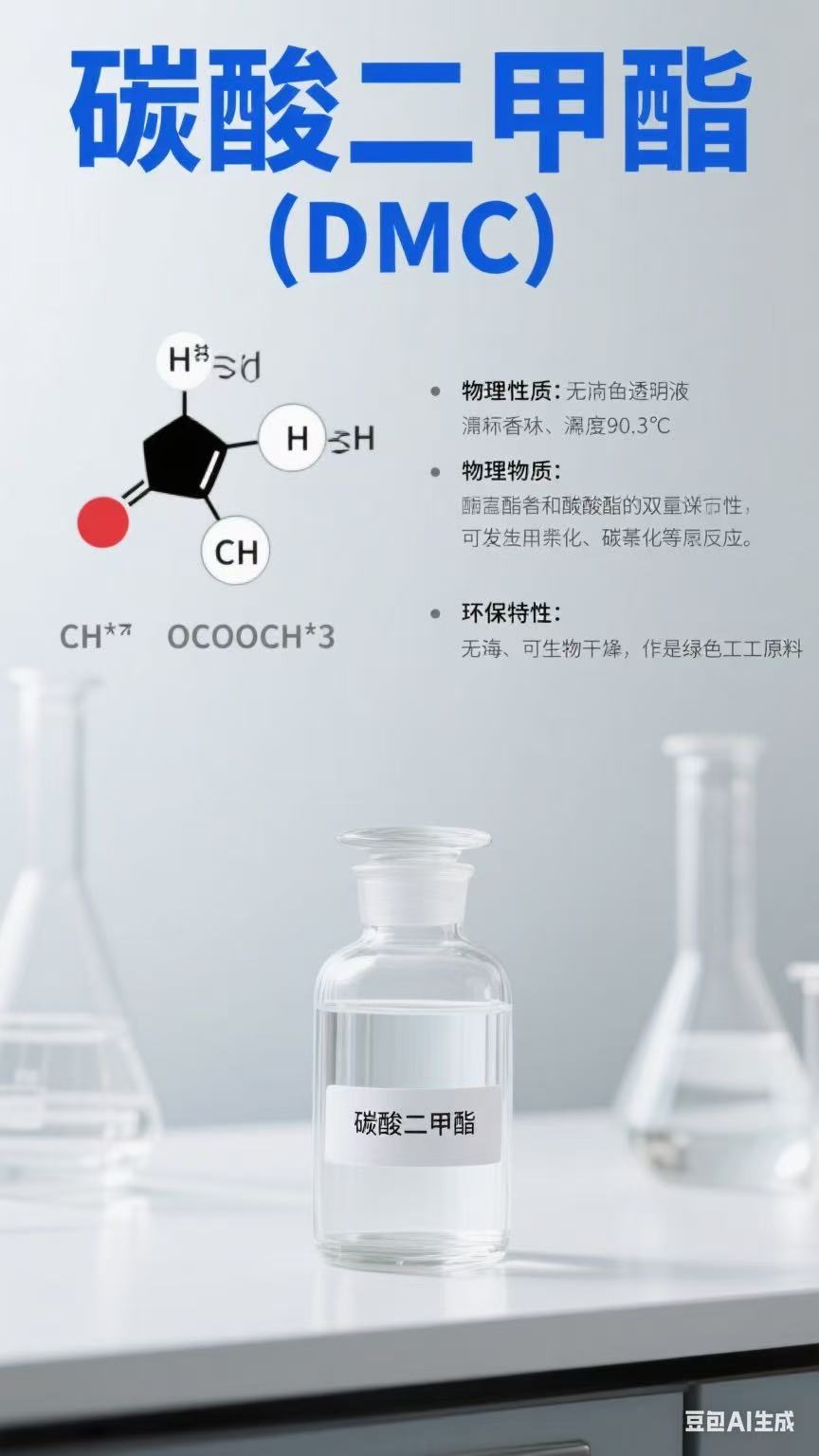
• Multipurpose Dimethyl Carbonate
  • video

Multipurpose Dimethyl Carbonate

  • Yulin Chemical, Guoneng Shenhua, Shaanxi Weihua, Shaanxi Yanchang
  • Qingzhou, China
  • July 16, 2025
  • 120,000 tons
The following introduces the core properties of carbon, phosphoric acid, and dimethyl carbonate: 1. Carbon (Carbon, element symbol C) • Basic information: Atomic number 6, atomic weight 12.01, belongs to the non-metallic element of group IVA, and is the core element of organic matter. • Physical properties: ◦ There are many allotropes with significant differences in properties: ◦ Diamond: colorless and transparent crystal, extremely high hardness (Mohs hardness 10), non-conductive, melting point about 3550℃. ◦ Graphite: gray-black flaky solid, soft (can be used as a lubricant), good electrical and thermal conductivity, melting point about 3652℃. ◦ Fullerene (C₆₀), carbon nanotubes, etc.: new nanomaterials with special mechanical and electrical properties. ◦ Stable chemical properties at room temperature, insoluble in water, dilute acid/alkali. • Chemical properties: ◦ Active at high temperatures, can react with oxygen (combustion to produce CO or CO₂); ◦ React with metals to produce carbides (such as calcium carbide CaC₂); ◦ React with non-metals (such as hydrogen to produce methane, and sulfur to produce CS₂). • Main uses: ◦ Diamond is used for cutting and jewelry; graphite is used for electrodes, pencil leads, and lubricants; ◦ Carbon nanomaterials are used in electronic devices and composite materials; ◦ As fuel (such as coal), metallurgical reducing agent, etc. 2. Phosphoric acid (Phosphoric acid, chemical formula H₃PO₄) • Basic information: ternary inorganic acid, molecular weight 98.00, mostly produced industrially by the reaction of phosphate rock and sulfuric acid. • Physical properties: ◦ Pure product is colorless and transparent crystal, melting point 42.35℃; industrial grade is mostly 85% viscous liquid (similar to syrup), odorless, sour taste. ◦ Soluble in water, miscible with ethanol, highly hygroscopic. • Chemical properties: ◦ Medium-strong acid (ionization is carried out in steps, weaker than sulfuric acid and hydrochloric acid), with the general properties of acid: neutralized with alkali to form phosphate (such as sodium phosphate Na₃PO₄), reacting with active metals to form hydrogen (such as reacting with zinc). ◦ Easily dehydrated by heat: pyrophosphoric acid (H₄P₂O₇) is generated at around 200°C, and metaphosphoric acid (HPO₃) is generated above 300°C. ◦ No strong oxidizing properties, weakly corrosive (mild to skin and metals). • Main uses: ◦ Agriculture: production of phosphate fertilizers (such as superphosphate); ◦ Food industry: as an acidifier, preservative (such as cola drinks); ◦ Industry: metal rust removal (mild corrosion), electroplating liquid components, detergent additives, etc. 3. Dimethyl carbonate (DMC, chemical formula C₃H₆O₃) • Basic information: ester compound, structural formula (CH₃O)₂CO, molecular weight 90.08, known as "green chemical raw material". • Physical properties: ◦ Colorless transparent liquid, with slight fragrance, boiling point 90.3℃, melting point 4℃, density 1.07g/cm³ (20℃). ◦ Good solubility: partially miscible with water (solubility about 13% at 20℃), miscible with organic solvents such as ethanol, ether, acetone, etc. ◦ Flash point 31℃, it is a flammable liquid, but the volatility is lower than gasoline. • Chemical properties: ◦ It has typical reactions of esters: hydrolysis to produce methanol and carbonic acid; alcoholysis to produce other carbonates; reaction with amines to produce urea compounds. ◦ The molecule contains active groups such as methyl and methoxy groups, which can replace highly toxic phosgene and dimethyl sulfate for chemical synthesis, and has excellent environmental protection. ◦ Good stability, not easy to decompose at room temperature, and will accelerate hydrolysis when encountering strong acids and alkalis. • Main uses: ◦ Solvent: used in coatings, adhesives, lithium battery electrolytes (high dielectric constant, good safety); ◦ Chemical intermediates: synthetic polycarbonate, medicine, pesticides, etc.; ◦ Gasoline additives: improve octane number and reduce exhaust pollution. The three belong to elements, inorganic acids, and organic esters, with significant differences in properties and applications, but all have an important position in the fields of industry, materials, and chemicals.
The following introduces the core properties of carbon, phosphoric acid, and dimethyl carbonate:


1. Carbon (Carbon, element symbol C)


• Basic information: Atomic number 6, atomic weight 12.01, belongs to the non-metallic element of group IVA, and is the core element of organic matter.


• Physical properties:


◦ There are many allotropes with significant differences in properties:


◦ Diamond: colorless and transparent crystal, extremely high hardness (Mohs hardness 10), non-conductive, melting point about 3550℃.


◦ Graphite: gray-black flaky solid, soft (can be used as a lubricant), good electrical and thermal conductivity, melting point about 3652℃.


◦ Fullerene (C₆₀), carbon nanotubes, etc.: new nanomaterials with special mechanical and electrical properties.


◦ Stable chemical properties at room temperature, insoluble in water, dilute acid/alkali.


• Chemical properties:


◦ Active at high temperatures, can react with oxygen (combustion to produce CO or CO₂);


◦ React with metals to produce carbides (such as calcium carbide CaC₂);


◦ React with non-metals (such as hydrogen to produce methane, and sulfur to produce CS₂).


• Main uses:


◦ Diamond is used for cutting and jewelry; graphite is used for electrodes, pencil leads, and lubricants;


◦ Carbon nanomaterials are used in electronic devices and composite materials;


◦ As fuel (such as coal), metallurgical reducing agent, etc.


2. Phosphoric acid (Phosphoric acid, chemical formula H₃PO₄)


• Basic information: ternary inorganic acid, molecular weight 98.00, mostly produced industrially by the reaction of phosphate rock and sulfuric acid.


• Physical properties:


◦ Pure product is colorless and transparent crystal, melting point 42.35℃; industrial grade is mostly 85% viscous liquid (similar to syrup), odorless, sour taste.


◦ Soluble in water, miscible with ethanol, highly hygroscopic.


• Chemical properties:


◦ Medium-strong acid (ionization is carried out in steps, weaker than sulfuric acid and hydrochloric acid), with the general properties of acid: neutralized with alkali to form phosphate (such as sodium phosphate Na₃PO₄), reacting with active metals to form hydrogen (such as reacting with zinc).


◦ Easily dehydrated by heat: pyrophosphoric acid (H₄P₂O₇) is generated at around 200°C, and metaphosphoric acid (HPO₃) is generated above 300°C.


◦ No strong oxidizing properties, weakly corrosive (mild to skin and metals).


• Main uses:


◦ Agriculture: production of phosphate fertilizers (such as superphosphate);


◦ Food industry: as an acidifier, preservative (such as cola drinks);


◦ Industry: metal rust removal (mild corrosion), electroplating liquid components, detergent additives, etc.


3. Dimethyl carbonate (DMC, chemical formula C₃H₆O₃)


• Basic information: ester compound, structural formula (CH₃O)₂CO, molecular weight 90.08, known as "green chemical raw material".


• Physical properties:


◦ Colorless transparent liquid, with slight fragrance, boiling point 90.3℃, melting point 4℃, density 1.07g/cm³ (20℃).


◦ Good solubility: partially miscible with water (solubility about 13% at 20℃), miscible with organic solvents such as ethanol, ether, acetone, etc.


◦ Flash point 31℃, it is a flammable liquid, but the volatility is lower than gasoline.


• Chemical properties:


◦ It has typical reactions of esters: hydrolysis to produce methanol and carbonic acid; alcoholysis to produce other carbonates; reaction with amines to produce urea compounds.


◦ The molecule contains active groups such as methyl and methoxy groups, which can replace highly toxic phosgene and dimethyl sulfate for chemical synthesis, and has excellent environmental protection.


◦ Good stability, not easy to decompose at room temperature, and will accelerate hydrolysis when encountering strong acids and alkalis.


• Main uses:


◦ Solvent: used in coatings, adhesives, lithium battery electrolytes (high dielectric constant, good safety);


◦ Chemical intermediates: synthetic polycarbonate, medicine, pesticides, etc.;


◦ Gasoline additives: improve octane number and reduce exhaust pollution.


The three belong to elements, inorganic acids, and organic esters, with significant differences in properties and applications, but all have an important position in the fields of industry, materials, and chemicals.


Related Products

Get the latest price? We will reply as soon as possible (within 12 hours)