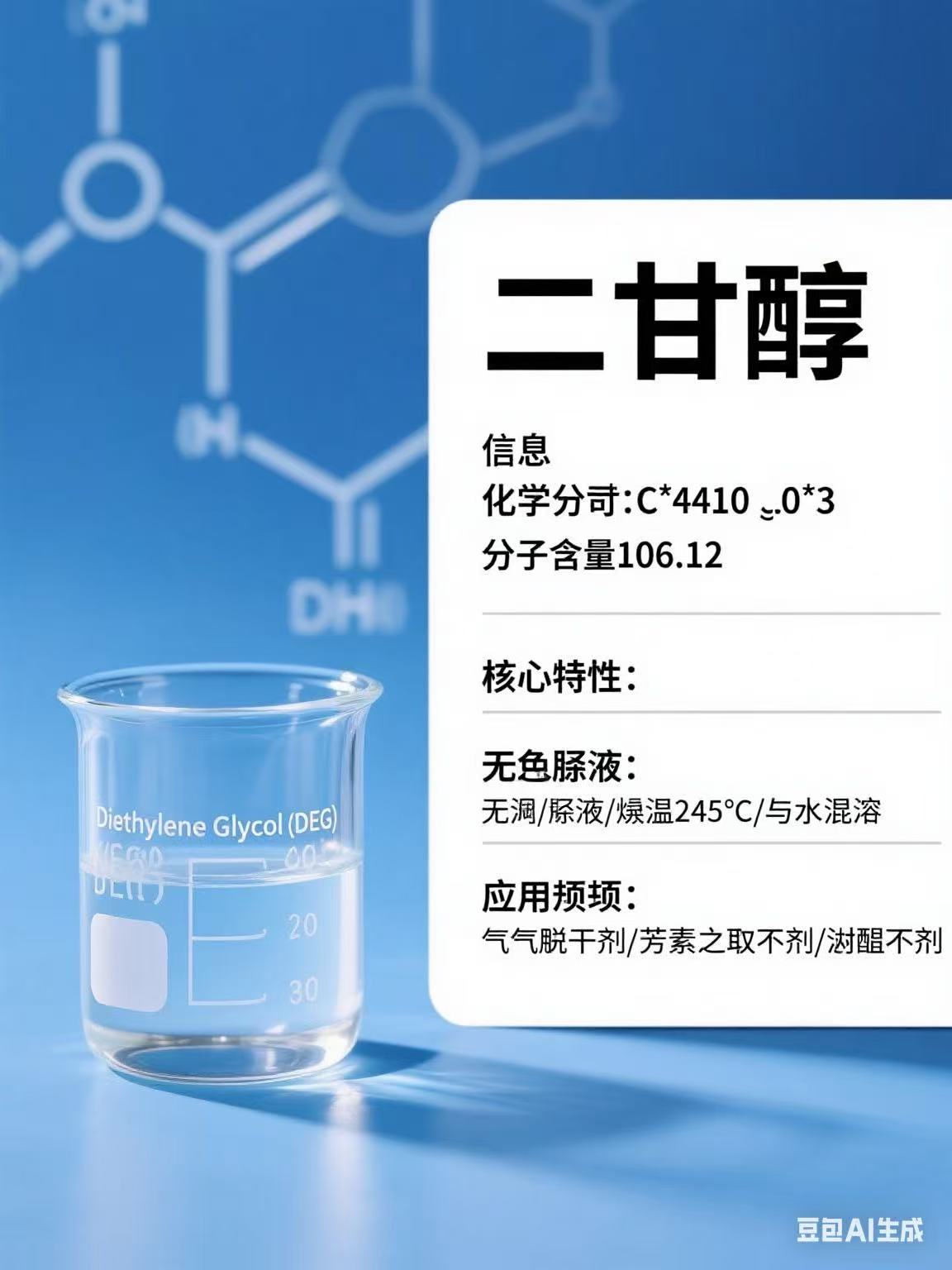
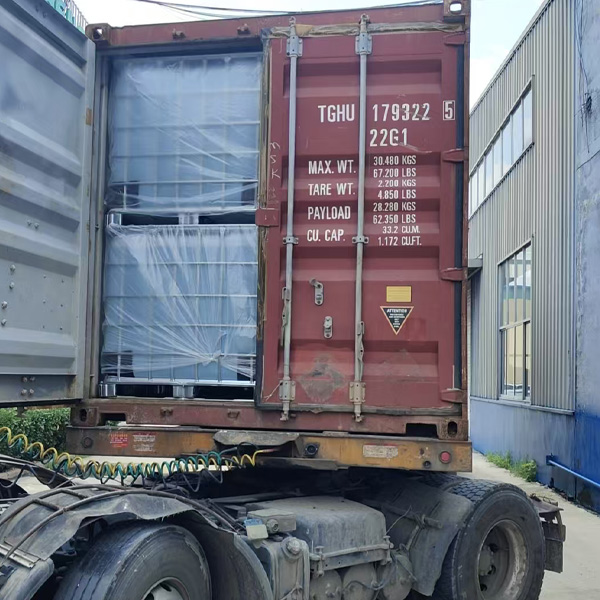
Name: Diethylene glycol, also known as diethylene glycol, diethylene glycol ether.
◦ Chemical formula: C₄H₁₀O₃.
◦ Molecular weight: 106.12.
◦ Structural formula: HO-CH₂CH₂-O-CH₂CH₂-OH.
• Physical properties:
◦ Appearance: colorless, odorless, transparent, hygroscopic viscous liquid with a pungent smell.
◦ Boiling point: 245℃ (101.3kPa).
◦ Melting point: -10.5℃.
◦ Density: 1.118g/mL (20/4℃).
◦ Solubility: Miscible with water, ethanol, acetone, etc., immiscible with ether, carbon tetrachloride, etc.
• Chemical properties: It has the general chemical properties of alcohol and ether, and can undergo esterification, etherification, condensation and other reactions. Avoid contact with oxides and moist water. It is flammable and low in toxicity.
• Toxicity: It is slightly toxic, can be absorbed through the skin, has little irritation to the skin and mucous membranes, has an inhibitory effect on the central nervous system, can cause kidney pathological changes and urinary tract stones, and the estimated lethal dose for a single oral administration is 1mL/kg.
• Main uses: It is mainly used as a gas dehydrating agent and aromatic hydrocarbon extraction solvent. It can also be used as a solvent for nitrocellulose, resin, etc. It is also used in the production of unsaturated polyester resins, plasticizers, brake oil additives, etc.
• Source: It is mainly derived from the by-products produced by the production of ethylene glycol by ethylene oxide in the chemical industry.
• Quality standards: For example, diethylene glycol content ≥99.60% (mass fraction), ethylene glycol ≤0.10% (mass fraction), water ≤0.05% (mass fraction), etc.
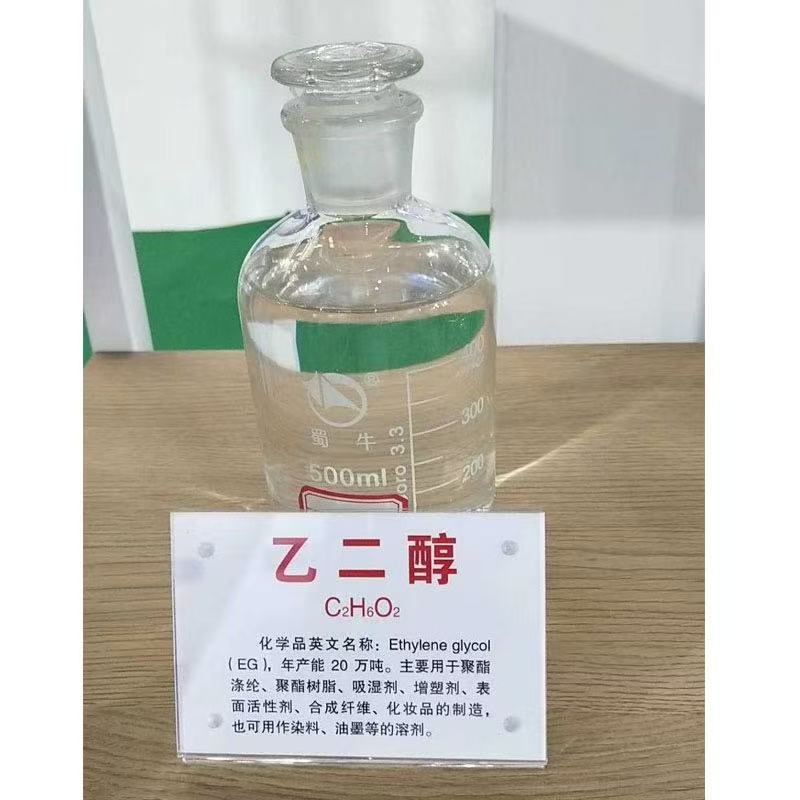
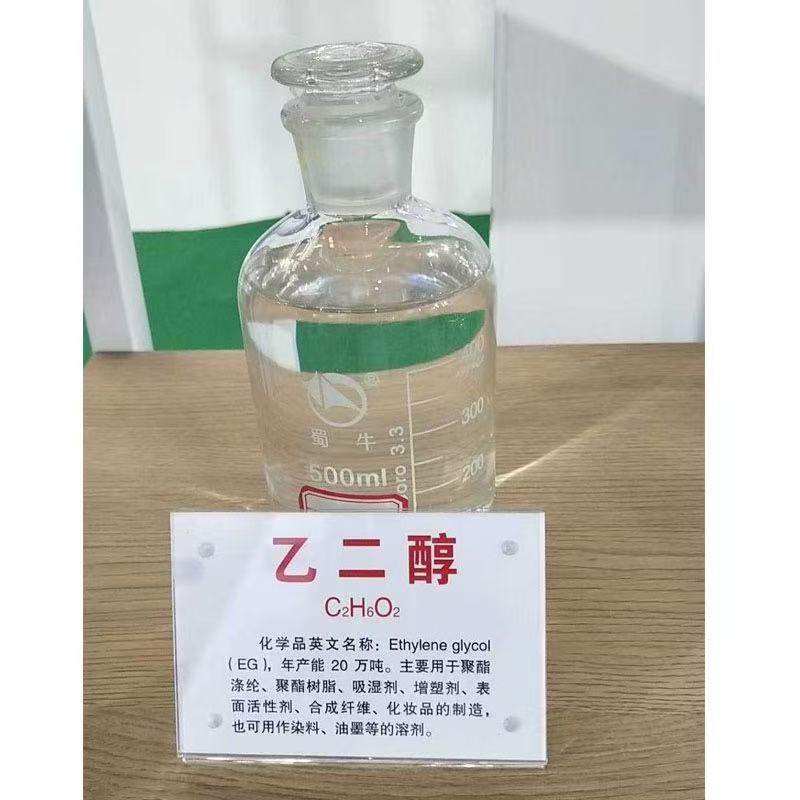
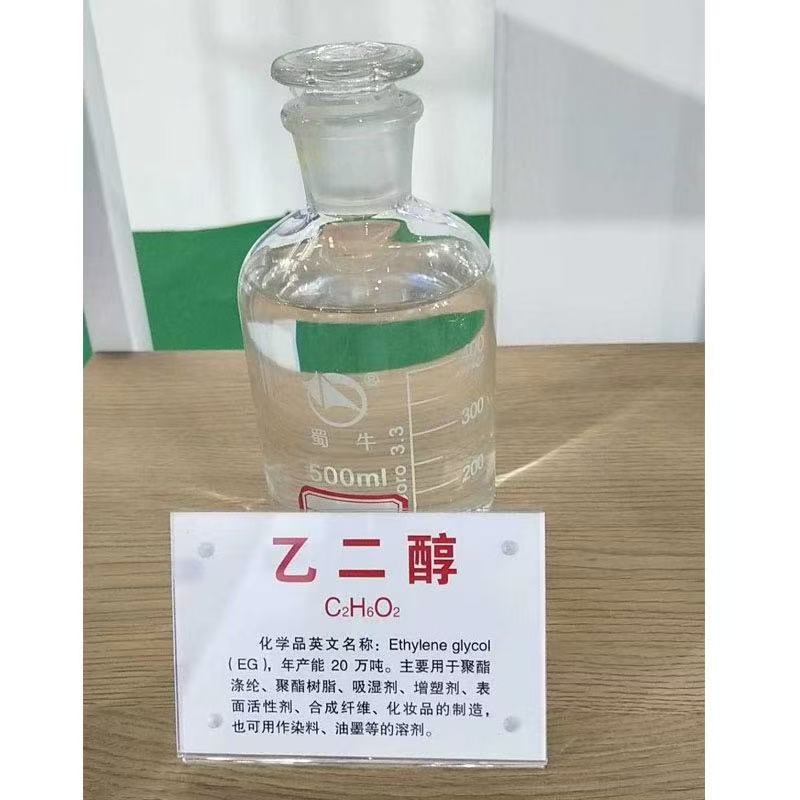
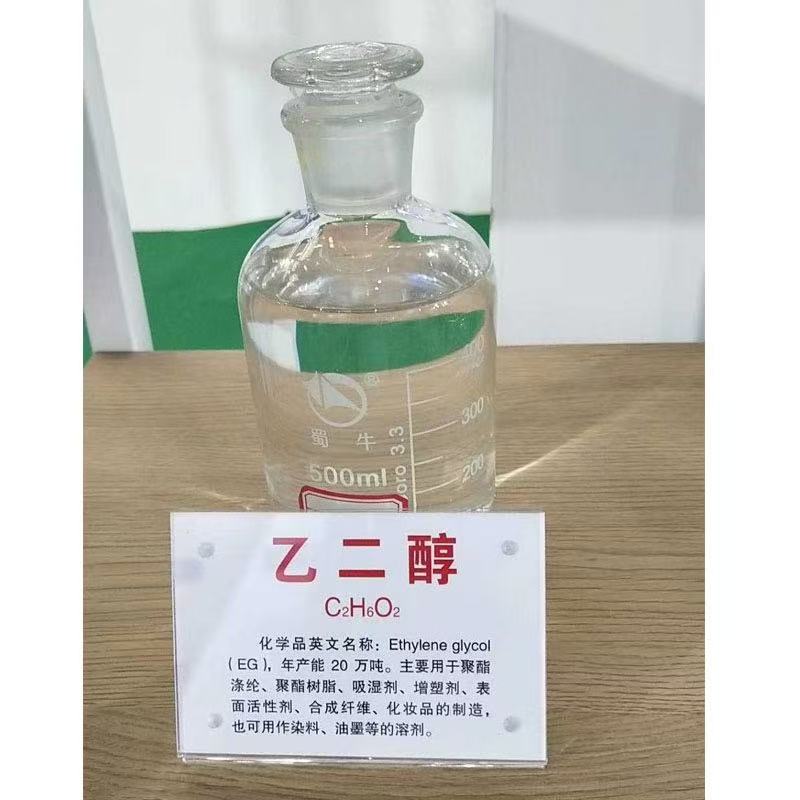
More →Ethylene glycol is an important chemical raw material, and its main properties are as follows:
Physical properties
• Appearance: colorless, odorless, sweet transparent liquid.
• Boiling point: about 197.3℃ (under standard atmospheric pressure).
• Melting point: about -12.9℃.
• Solubility: miscible with various polar solvents such as water, ethanol, acetone in any proportion, slightly soluble in ether, insoluble in non-polar solvents such as petroleum ether.
• Density: about 1.113 g/cm³ (at 20℃).
Chemical properties
• Stability: stable under normal conditions, but can undergo dehydration, oxidation and other reactions when heated.
• Reactivity:
◦ It has the general properties of alcohols and can undergo esterification, etherification, oxidation, dehydration and other reactions.
◦ It can react with dibasic acids to produce polyester, which is a key raw material for the production of polyester fibers (such as polyester) and polyester resins.
◦ It is hygroscopic, toxic to animals, and can cause kidney damage if ingested.
These properties make it widely used in many fields such as chemicals, textiles, and automobiles, such as in the production of antifreeze, polyester products, lubricants, etc.
More →Ethylene glycol is an important chemical raw material, and its main properties are as follows:
Physical properties
• Appearance: colorless, odorless, sweet transparent liquid.
• Boiling point: about 197.3℃ (under standard atmospheric pressure).
• Melting point: about -12.9℃.
• Solubility: miscible with various polar solvents such as water, ethanol, acetone in any proportion, slightly soluble in ether, insoluble in non-polar solvents such as petroleum ether.
• Density: about 1.113 g/cm³ (at 20℃).
Chemical properties
• Stability: stable under normal conditions, but can undergo dehydration, oxidation and other reactions when heated.
• Reactivity:
◦ It has the general properties of alcohols and can undergo esterification, etherification, oxidation, dehydration and other reactions.
◦ It can react with dibasic acids to produce polyester, which is a key raw material for the production of polyester fibers (such as polyester) and polyester resins.
◦ It is hygroscopic, toxic to animals, and can cause kidney damage if ingested.
These properties make it widely used in many fields such as chemicals, textiles, and automobiles, such as in the production of antifreeze, polyester products, lubricants, etc.
More →Ethylene glycol is an important chemical raw material, and its main properties are as follows:
Physical properties
• Appearance: colorless, odorless, sweet transparent liquid.
• Boiling point: about 197.3℃ (under standard atmospheric pressure).
• Melting point: about -12.9℃.
• Solubility: miscible with various polar solvents such as water, ethanol, acetone in any proportion, slightly soluble in ether, insoluble in non-polar solvents such as petroleum ether.
• Density: about 1.113 g/cm³ (at 20℃).
Chemical properties
• Stability: stable under normal conditions, but can undergo dehydration, oxidation and other reactions when heated.
• Reactivity:
◦ It has the general properties of alcohols and can undergo esterification, etherification, oxidation, dehydration and other reactions.
◦ It can react with dibasic acids to produce polyester, which is a key raw material for the production of polyester fibers (such as polyester) and polyester resins.
◦ It is hygroscopic, toxic to animals, and can cause kidney damage if ingested.
These properties make it widely used in many fields such as chemicals, textiles, and automobiles, such as in the production of antifreeze, polyester products, lubricants, etc.
More →Ethylene glycol is an important chemical raw material, and its main properties are as follows:
Physical properties
• Appearance: colorless, odorless, sweet transparent liquid.
• Boiling point: about 197.3℃ (under standard atmospheric pressure).
• Melting point: about -12.9℃.
• Solubility: miscible with various polar solvents such as water, ethanol, acetone in any proportion, slightly soluble in ether, insoluble in non-polar solvents such as petroleum ether.
• Density: about 1.113 g/cm³ (at 20℃).
Chemical properties
• Stability: stable under normal conditions, but can undergo dehydration, oxidation and other reactions when heated.
• Reactivity:
◦ It has the general properties of alcohols and can undergo esterification, etherification, oxidation, dehydration and other reactions.
◦ It can react with dibasic acids to produce polyester, which is a key raw material for the production of polyester fibers (such as polyester) and polyester resins.
◦ It is hygroscopic, toxic to animals, and can cause kidney damage if ingested.
These properties make it widely used in many fields such as chemicals, textiles, and automobiles, such as in the production of antifreeze, polyester products, lubricants, etc.
More →Ethylene glycol is an important chemical raw material, and its main properties are as follows:
Physical properties
• Appearance: colorless, odorless, sweet transparent liquid.
• Boiling point: about 197.3℃ (under standard atmospheric pressure).
• Melting point: about -12.9℃.
• Solubility: miscible with various polar solvents such as water, ethanol, acetone in any proportion, slightly soluble in ether, insoluble in non-polar solvents such as petroleum ether.
• Density: about 1.113 g/cm³ (at 20℃).
Chemical properties
• Stability: stable under normal conditions, but can undergo dehydration, oxidation and other reactions when heated.
• Reactivity:
◦ It has the general properties of alcohols and can undergo esterification, etherification, oxidation, dehydration and other reactions.
◦ It can react with dibasic acids to produce polyester, which is a key raw material for the production of polyester fibers (such as polyester) and polyester resins.
◦ It is hygroscopic, toxic to animals, and can cause kidney damage if ingested.
These properties make it widely used in many fields such as chemicals, textiles, and automobiles, such as in the production of antifreeze, polyester products, lubricants, etc.
More →